StatAgent
A statistic anyone can recompute, and that stops when data is missing.
For developers · Figures from practice data. Open source, MIT. · github.com (opens another website)
What you do with it
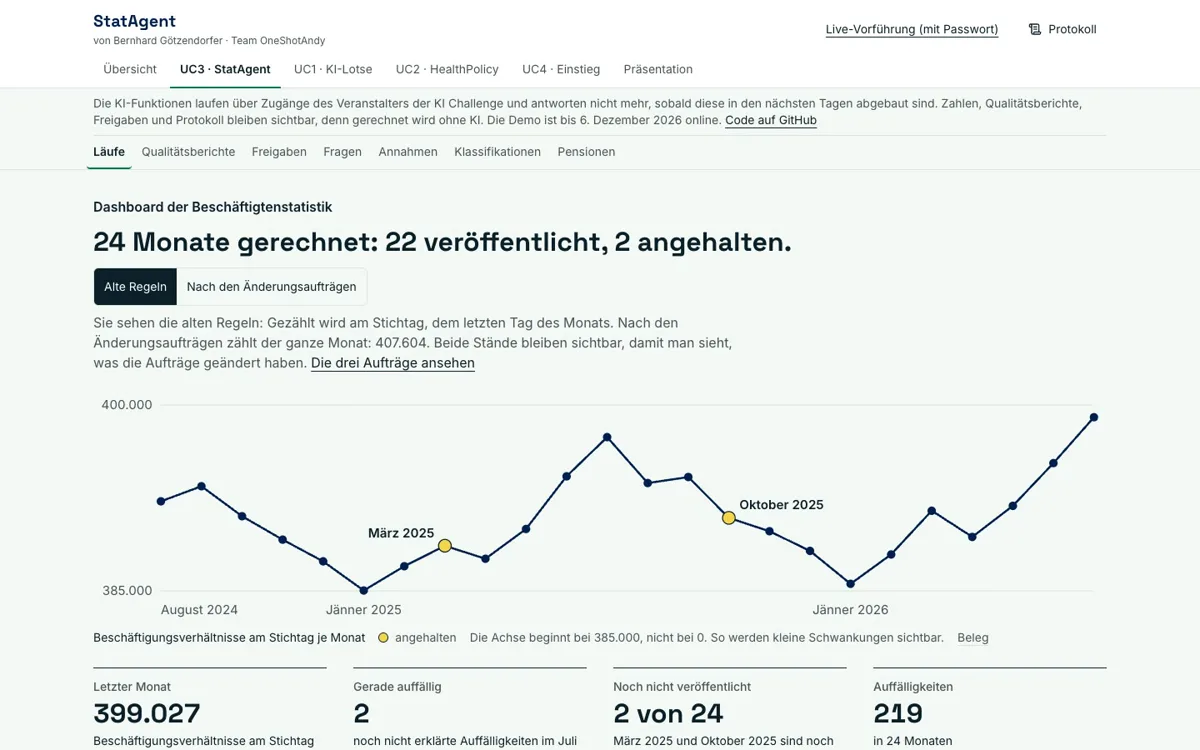
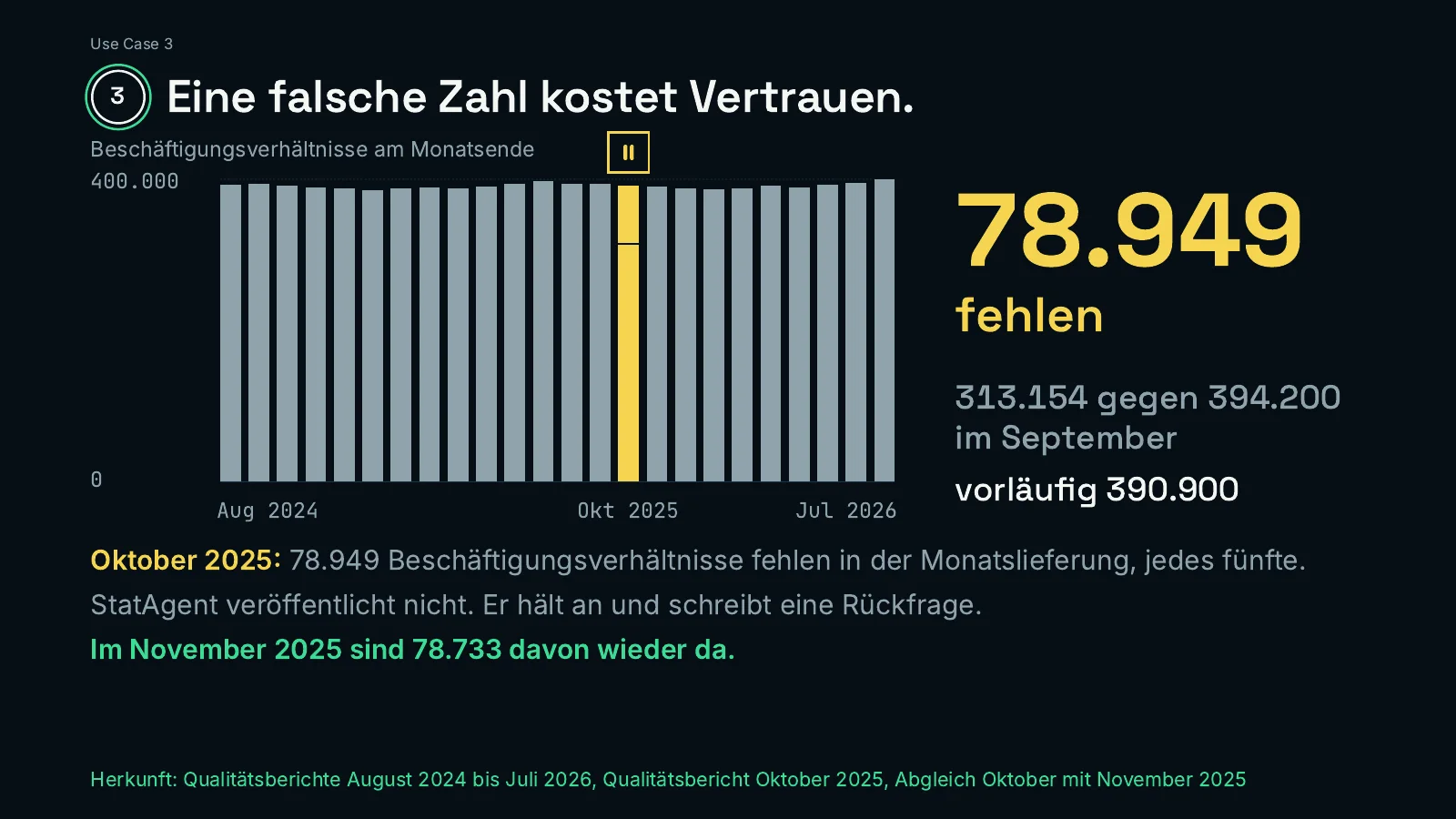
You look at the chart across all the months. One of the months is marked in yellow rather than shown as a sudden drop: its delivery was missing employment records, so StatAgent held it back and wrote a query. In the next month's delivery, almost all of the missing records are back. The slump was never real, and it was never published.
- Who it's for
- For public bodies and statistics offices that publish figures from large monthly data deliveries and want anyone to be able to check the sums.
- Where it stands
- Built at a competition on practice data, not in use at any public body. I have switched the online demo off; the code and a demo video are public.
Step by step
Check the delivery
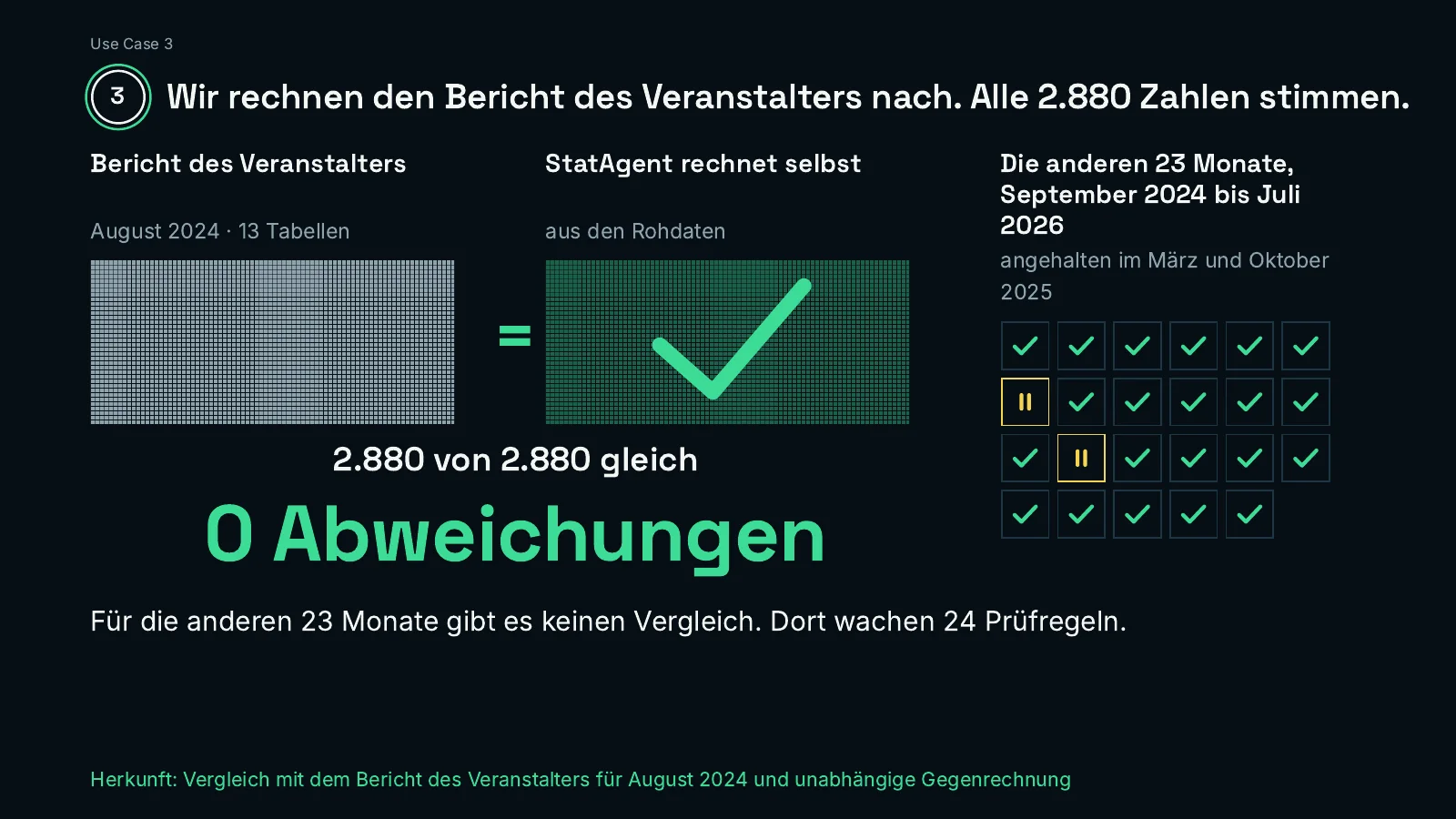
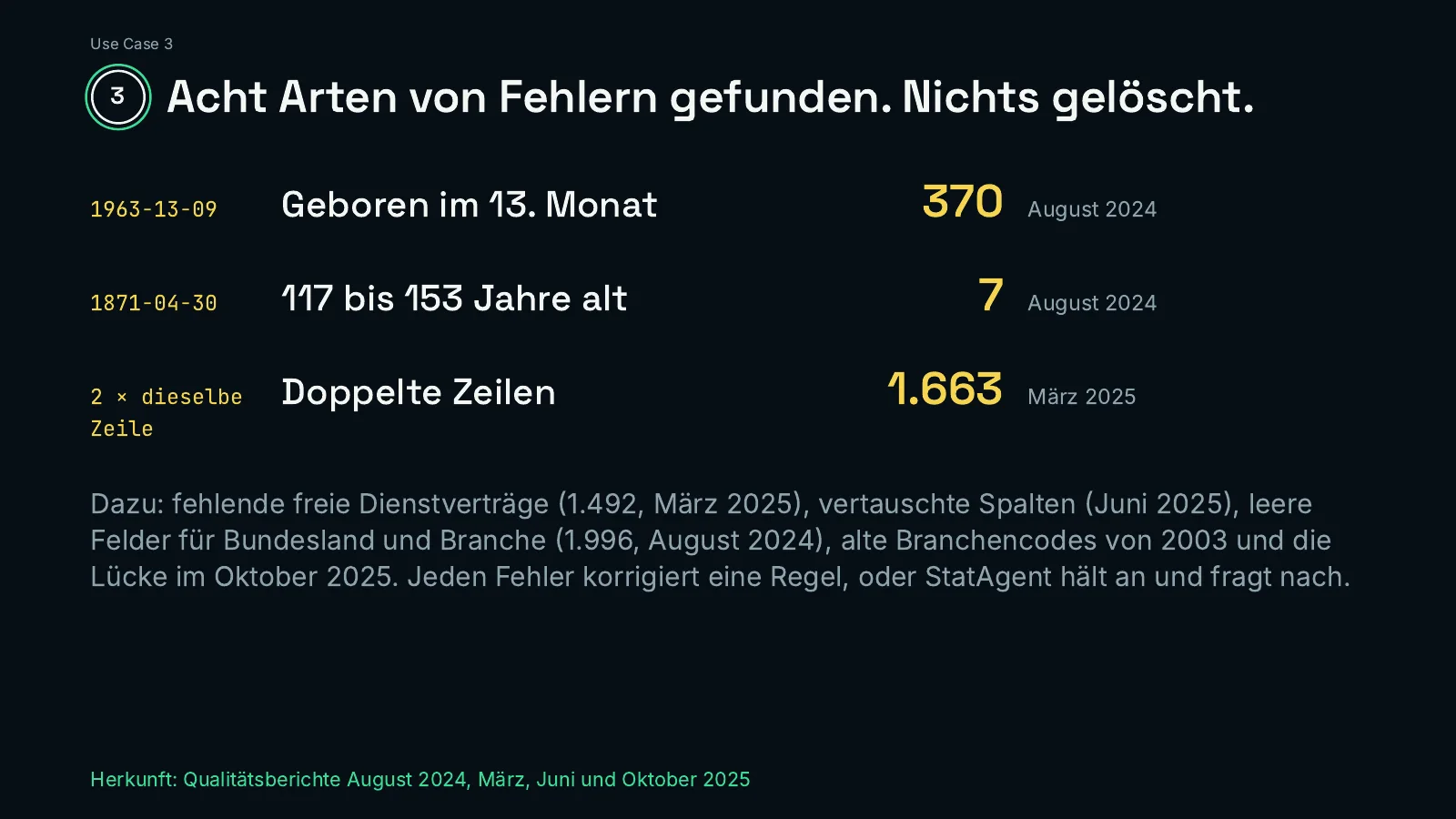
Every month a large table of all employment records arrives. The program reads it in and checks it against 24 fixed rules.
Count at the reference date
If the delivery adds up, the program takes the count as of the reference date and writes statistics and a quality report. No language model does the maths.
Stop rather than guess
If something is missing, StatAgent holds the month back and writes a query instead of publishing a wrong figure.
Sign off a new rule
When a rule changes, an agent proposes the new one and the program runs both. The new rule only takes effect once a named person signs it off.
How it works
- No language model
- in the monthly run. When a rule changes, an agent only drafts the proposal.
- The code
- checks every delivery against 24 rules, takes the count as of the reference date and stops when a delivery doesn't add up.
Why it exists
One monthly delivery in the practice data was missing one in five employment records. Published as it was, that would have looked like a slump in the labour market.
The proof
- 22 of 24months
- 2held back
Built at the KI Challenge 2026, 5 and 6 November 2026.
The slides

Further reading
Part of what you get
This product is an example of: