Three Stages in Two Weeks -- as a Builder, Not a Speaker
waff Future Fit Festival, web3 hub vienna and the Vienna Software Architecture Meetup: three appearances back to back. Why I get on stages because I build, not the other way around.
Notes from my AI practice: agentic coding, multi-agent architecture, mid-market use cases.

waff Future Fit Festival, web3 hub vienna and the Vienna Software Architecture Meetup: three appearances back to back. Why I get on stages because I build, not the other way around.

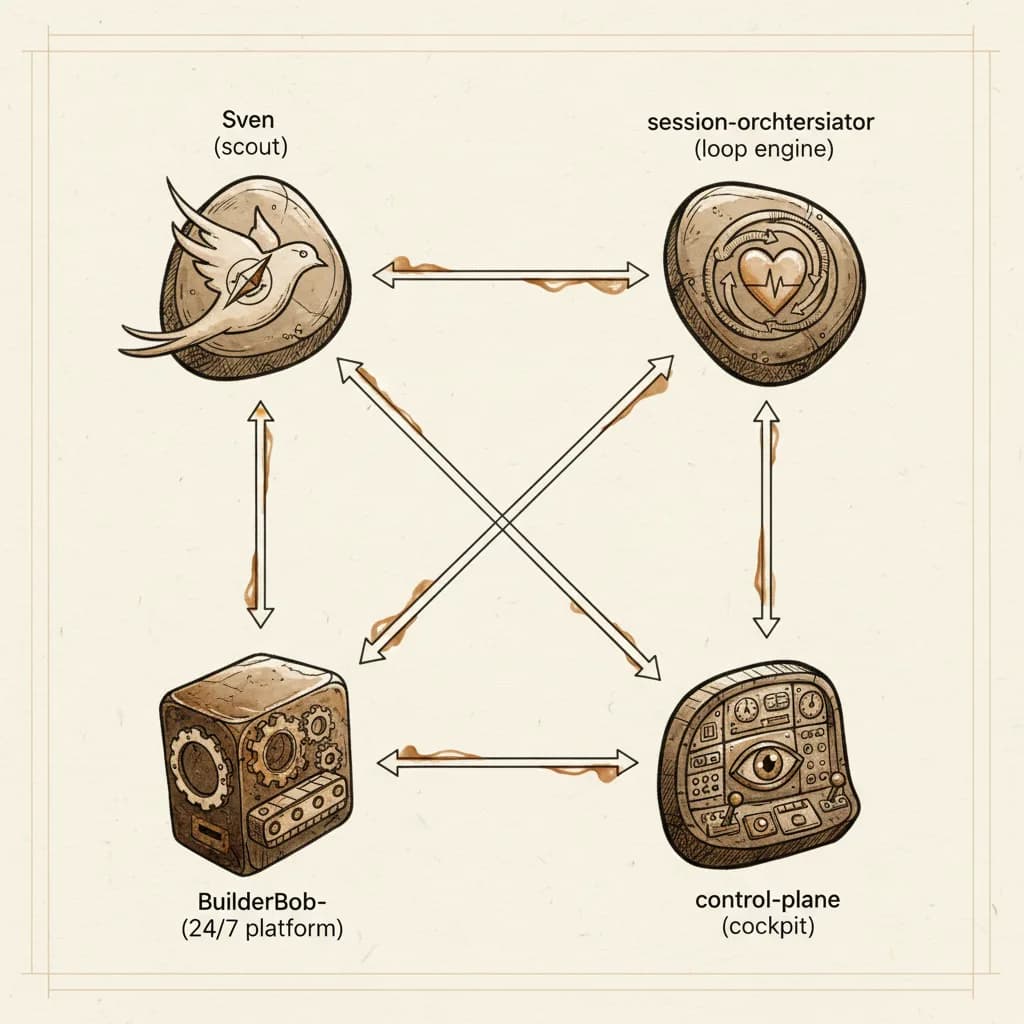
Three agents running around the clock: Sven scouts AI ideas, BuilderBob runs agenticbuilders.at with 19 cron jobs, session-orchestrator drives the coding loop. Architecture, hard escalation gates, and what agentic engineering actually looks like in practice.

An open-source multi-agent tool matures in 9 days across 18 sessions: from the /plan to /evolve lifecycle across four runtimes. What daily self-use made of it.

Established companies with approval processes lag on AI not out of inertia, but because of a widening gap between what the tools can do and what their structures allow.

The bottleneck in AI-assisted development has moved from writing code to judging it. Why verification is the skill that matters now – from daily practice, not theory.

Two weeks after my first hackathon: 1st place at BitGN PAC 2026 at AI Factory Austria in Vienna. Autonomous AI agent, 104 tasks, 5 security layers, blind scoring.

OpenClaw Hackathon Vienna, House of Innovation, 150+ participants. What happens when four people build an AI-powered B2B Sales Agent in one night. An honest experience report.

An honest week as a solo founder: GitLab migration, n8n automations, a live content pipeline on Instagram, and the question of how far AI agents can really go today.

Harvard Business Review identified 9 trends shaping work in 2026. As someone who builds and ships AI systems daily, I agree with some and have honest disagreements with others. Here's my take from the European founder perspective.

AI for small and medium enterprises: What actually works, what it costs, and how to get started without the hype.

What happens when you build over 100 AI prototypes? An honest account of the gap between prototype and product – and what 3,000+ development sessions reveal.